A Turban Older Than the Kingdoms That Wore It
The safa (or pagdi) has been tied across the Indian subcontinent for centuries, long before it became a wedding staple. In Rajasthan especially, it carried real social weight — the way a turban was tied, its height, colour and shape could once signal a person's caste, region, occasion and even their state of mourning or celebration. Royal courts developed distinct regional styles — Jodhpuri, Jaipuri, Udaipuri, Mewari — each recognisable at a glance to anyone from that region. Over time the safa moved from everyday dress to a ceremonial one, and today it survives almost entirely in that ceremonial role: weddings, festivals and formal occasions, tied fresh by hand for every event rather than worn day to day.
Every Colour Says Something
Colour choice in a safa is rarely just aesthetic — it's tied to the occasion, the region, and sometimes the wearer's role in the ceremony. A quick guide:
Maroon & Red
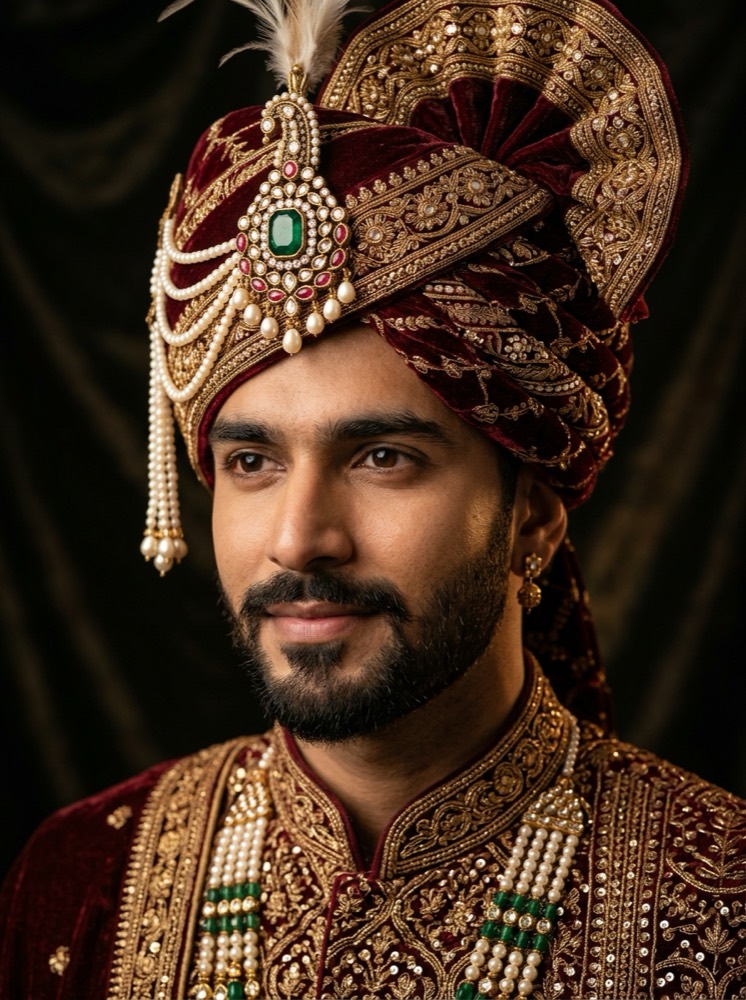
The classic wedding colour — auspicious, bold, and tied to marital union across most of North India.
Saffron
A colour of valour and sacrifice, historically worn by Rajput warriors before battle — carried into weddings as a mark of courage.
Royal Blue
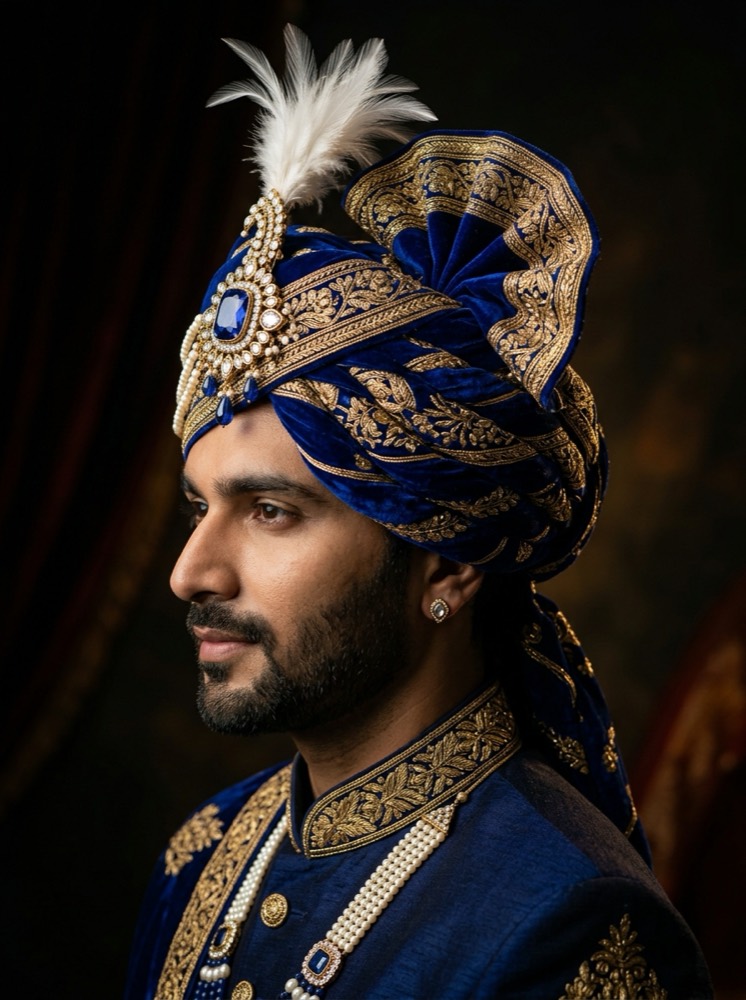
Associated with depth and nobility — a favourite of Marwar (Jodhpur) royalty, still common in that region's safas today.
Pink & Chanderi Pastels
Festive and celebratory — popular for sangeet, haldi and daytime functions rather than the main wedding ceremony.
Gold & Zari
Prosperity and status — the metallic thread work itself, more than the base colour, signals a formal, high-occasion safa.
White & Cream
Peace and simplicity — worn more in Gujarat and by elders, or for daytime and non-wedding functions.
Five Steps, One Continuous Fold
Sizing
The cloth length and head measurement decide the fold width — a poor fit is the most common cause of a safa loosening during the event.
Pleating
The fabric is folded into even, narrow pleats by hand — the pleat count and tightness is what gives each regional style (Jodhpuri, rounded, Pacharangi) its distinct shape.
Wrapping
The pleated cloth is wound around the head in overlapping turns, building height and structure from the base upward.
Securing
Pins anchor the layers from the inside, invisible once finished — this is what lets a safa survive a full day of dancing and movement.
Finishing
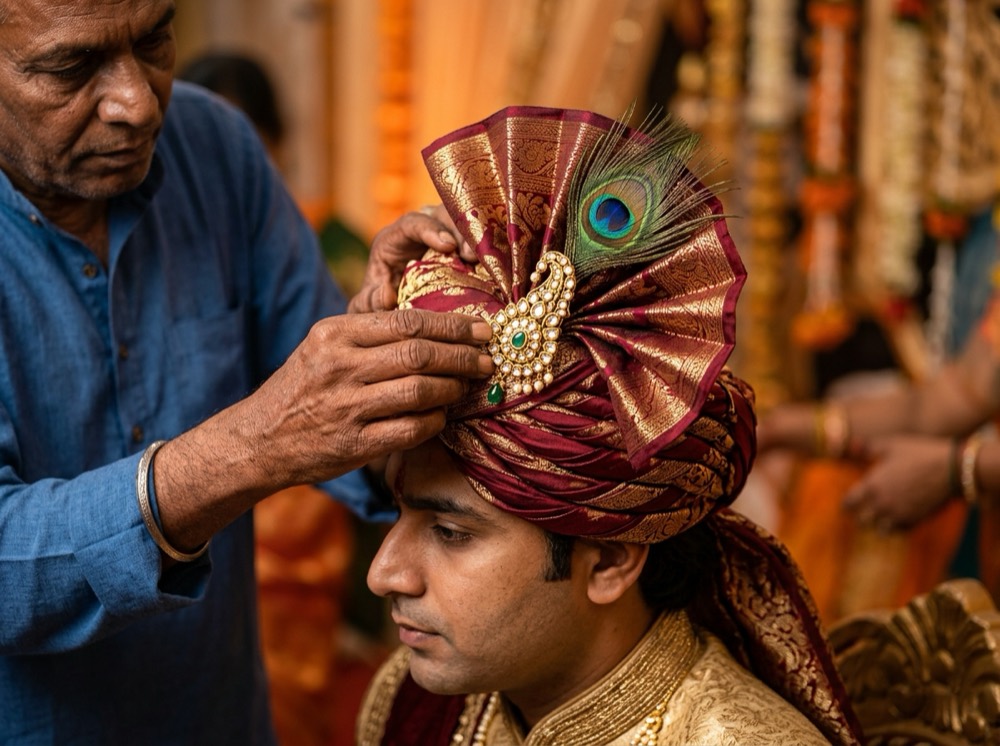
The tail (pagri palla) is draped and set, then the kalgi and any brooch are placed last, once the base shape is fully locked in.
More Than a Headpiece
In Rajputana tradition, offering or accepting a turban was a gesture of deep respect — removing another's turban was among the gravest insults, and gifting one's own was a mark of honour or alliance. Kalgi ornaments, once reserved for nobility, marked rank and occasion. That symbolism is why the groom's safa still holds centre stage at an Indian wedding today — it isn't just an outfit accessory, it's a small, wearable piece of that same tradition of honour, carried into a new generation's most important day.
Watch & Learn
Meet SafaKing
An introduction to our royal turban house.
More tying & styling videos coming soon.